Cleaning Services Marketing in Tampa
Tampa Bay's rapid growth creates consistent demand for cleaning services across residential, commercial, and move-in/move-out segments. New residents moving to Wesley Chapel, Brandon, and Riverview need cleaning services immediately. Corporate relocations to the Westshore Business District drive commercial cleaning demand. The cleaning companies growing fastest in Tampa are the ones with systematic marketing, not just word-of-mouth.
The Tampa Market
Hillsborough County adds 50,000+ residents annually - each one a potential cleaning client. CPCs for 'cleaning services Tampa' average $6-$14, making it one of the most affordable major metros for cleaning company advertising. Meta Ads perform exceptionally well in Tampa for recurring cleaning packages because the demographic skews younger homeowners who respond to social proof and first-clean offers.

What We Deliver in Tampa
Google Ads campaigns targeting residential and commercial cleaning in Tampa Bay
Meta Ads campaigns for recurring cleaning package acquisition
Local SEO for Hillsborough County Map Pack visibility
Move-in/move-out cleaning campaigns targeting real estate agents and property managers
Proof It Works
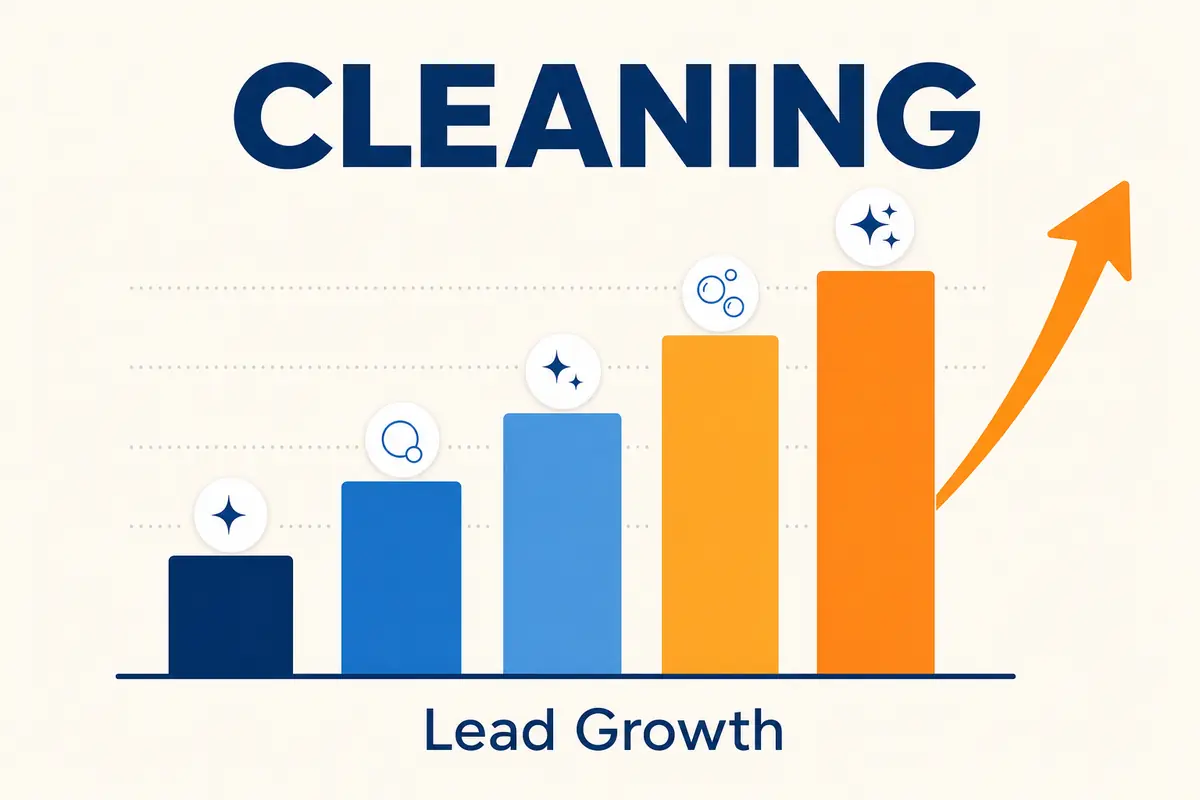
A Tampa cleaning company relying solely on referrals added Google Ads and Meta Ads campaigns. Within 60 days, they went from 15 recurring clients to 42 - a 180% increase. Their Meta Ads campaign targeting South Tampa homeowners generates recurring cleaning signups at $28 per acquisition.
Results based on actual client performance. Individual results may vary based on market conditions, budget, and competition.
Cleaning Services Marketing in Tampa: Common Questions
Straight answers to what Tampa cleaning company owners ask before they start.
What does a cleaning lead actually cost in Tampa?
Clicks on residential cleaning terms in Tampa run $6 to $14, meaningfully below Miami. At a 5 to 12 percent landing page conversion rate that puts cost per lead somewhere between $60 and $170. The wider point is that Tampa Bay buys cheaper clicks than South Florida for comparable job values, so the same monthly budget produces more learning here. A company priced out of Miami can often make the numbers work in Tampa.
How does Tampa compare to Miami as a market to compete in?
Less crowded and less expensive, with a different demand mix. Tampa Bay lacks Miami's short-term rental density, so the market leans toward recurring residential and commercial rather than turnover work. Fewer operators are bidding, which keeps costs down, but it also means less obvious segmentation - you cannot rely on a language or vacation-rental angle to sidestep the competition. Winning here is about matching offer to neighborhood rather than finding an underserved niche.
Which Tampa Bay areas should I target first?
Job value and drive time both matter more here than in a dense market. South Tampa, Westchase, Carrollwood and the Hyde Park area carry higher household incomes and larger average jobs. Brandon and Wesley Chapel are growing residential markets with lower competition but longer drive times, which eats margin if your routing is loose. The Westshore business district and downtown are the strongest commercial opportunities. Tampa Bay spreads across three counties - targeting all of it at once is the most common way to waste budget here.
Should I go after residential or commercial work in Tampa?
Tampa supports both more evenly than Miami does, which is an advantage if you build for it. Residential converts quickly from a single web enquiry and scales through volume across Hillsborough and Pasco. Commercial in Westshore and downtown involves walkthroughs, formal bids and longer cycles, but one office contract can outlast twenty residential accounts and churns far less. The practical sequence is to prove residential first because the feedback loop is fast, then fund the commercial pipeline from that cash flow.
What monthly budget do I need to compete in Tampa?
Because clicks run $6 to $14, roughly $1,200 to $2,500 a month in ad spend is enough to gather real conversion data - a lower entry point than Miami requires. Below about $1,000 you will not accumulate enough conversions to know which areas and search terms are working, and you end up optimizing on noise. The advantage of Tampa's lower click costs is that a modest budget still buys a genuine test rather than a fragment of one.
How much does Tampa's seasonality affect lead volume?
Less than most people expect, and less than Orlando. Tampa Bay has a substantial permanent population and a large snowbird contingent, which lifts demand from roughly October through April. Move-in and move-out cleaning spikes around lease turnover, and the pre-holiday period reliably drives deep cleans. The pattern is a seasonal tilt rather than the sharp swing a tourism-dominated market produces, so budgets can stay relatively steady year-round.
Do I need Google Ads, Local SEO, or both?
Both, in sequence rather than simultaneously. Ads produce enquiries within days and reveal within weeks which neighborhoods and services actually convert - that intelligence then tells you where to point SEO effort. Local SEO takes three to six months to move but produces leads with no click cost once ranking. Tampa's lower CPCs make paid traffic sustainable for longer than in Miami, which reduces the urgency but not the case for building organic visibility.
How do I compete against Handy, Thumbtack and the national platforms?
Not on their terms. Those platforms compete on instant booking and price transparency, and outbidding them on generic terms like 'cleaning service near me' is expensive and rarely profitable. What they cannot offer is a named local business answering the phone, the same cleaner each visit, or familiarity with a specific community's access and parking. In a spread-out market like Tampa Bay, being visibly local to a particular area is a stronger position than competing on price against a national brand.
What is the most common mistake Tampa cleaning companies make with Google Ads?
Targeting 'Tampa' as a single region. Tampa Bay covers Hillsborough, Pinellas and Pasco counties, and a campaign set to the whole metro will buy clicks from people 40 minutes outside any sensible service radius. Those clicks cost the same as the good ones and never convert into profitable jobs. Building campaigns around specific areas, with radius targeting matched to how far crews will actually travel, is the single highest-impact change most Tampa companies can make.
How long before I see booked jobs?
Google Ads produces enquiries within days of launch, but the first three to four weeks are calibration - identifying which areas, search terms and ad copy convert, and adding negative keywords for searches that waste money. Expect meaningful cost per lead improvement by week four to six. Local SEO runs on a different timeline entirely, three to six months before Google Business Profile and neighborhood pages gain traction. The two are deliberately paired: ads generate cash flow while SEO compounds.