Cleaning Services Marketing in Miami
Miami is the most competitive cleaning market in Florida - and the most lucrative. Between Brickell condos, Coral Gables estates, South Beach vacation rentals, and Doral commercial properties, the demand is enormous. But hundreds of cleaning companies are fighting for the same Google searches. The ones winning are not the cheapest - they are the most visible.
The Miami Market
Miami-Dade has 2.7 million residents and the highest concentration of Airbnb properties in Florida. CPCs for 'house cleaning Miami' run $8-$18. The vacation rental turnover segment is especially profitable - property managers pay premium rates for reliability and speed. Spanish-language campaigns targeting 'servicio de limpieza Miami' reach an underserved market with 60% lower CPCs.
What We Deliver in Miami
Google Ads campaigns for residential, commercial, and vacation rental cleaning segments
Spanish-language campaigns for Hialeah, Doral, and Kendall markets
Local SEO targeting Miami-Dade neighborhoods with highest demand
Airbnb/VRBO turnover cleaning campaigns targeting property managers
Proof It Works
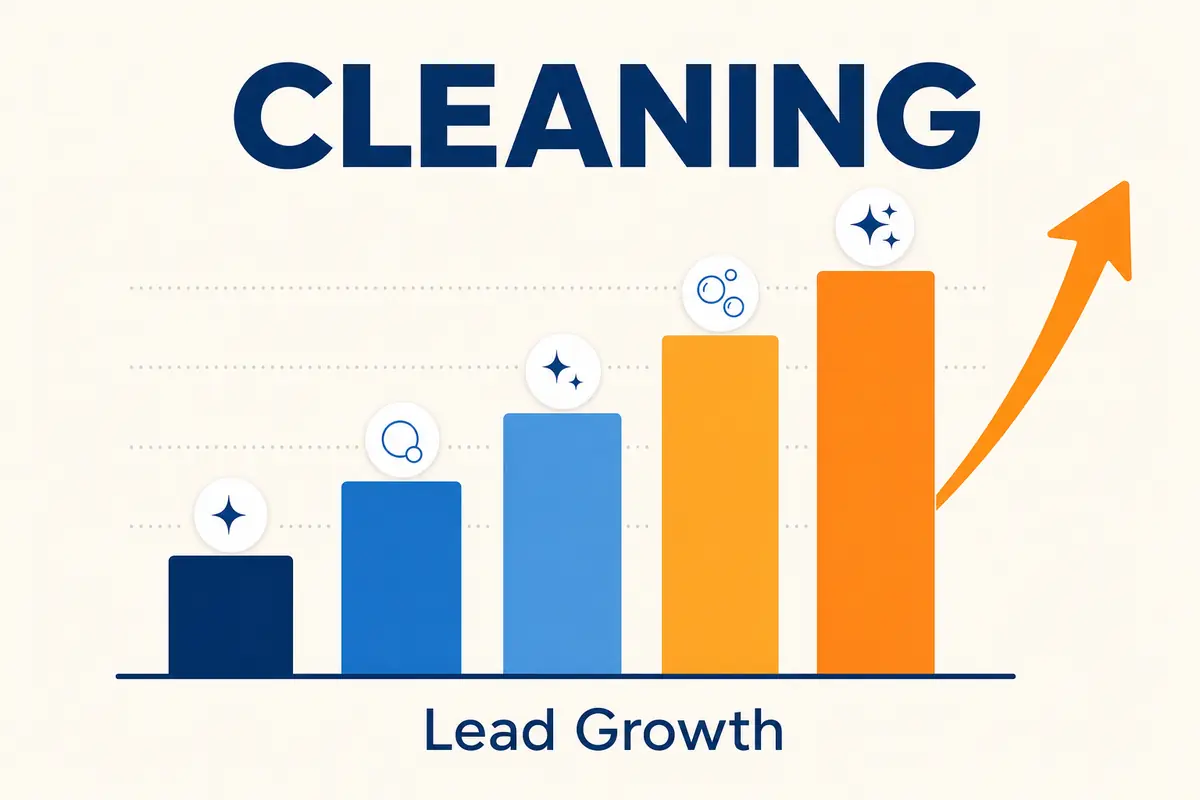
A Miami cleaning company added Spanish-language Google Ads and vacation rental campaigns to their existing residential marketing. Monthly leads grew from 22 to 67 while cost-per-lead dropped 40%. The vacation rental contracts alone added $12,000/month in recurring revenue.
Results based on actual client performance. Individual results may vary based on market conditions, budget, and competition.
Cleaning Services Marketing in Miami: Common Questions
Straight answers to what Miami cleaning company owners ask before they start.
What does a cleaning lead actually cost in Miami?
Clicks on 'house cleaning Miami' run $8 to $18. A landing page built for the search converts 5 to 12 percent of those clicks into an enquiry, so the realistic cost per lead is $80 to $200 — with the low end reserved for tightly targeted neighborhood campaigns and the high end for broad city-wide targeting. Spanish-language campaigns land materially cheaper. The number that matters is not cost per lead but cost per booked recurring client, since one biweekly residential account is worth far more than a single deep clean.
How competitive is Miami-Dade compared to the rest of Florida?
It is the most crowded cleaning market in the state. Miami-Dade combines 2.7 million residents, the highest concentration of short-term rentals in Florida, and a low barrier to entry, so hundreds of small operators compete alongside established regional companies. That density is why broad 'Miami' targeting burns budget: you are bidding against everyone. Narrow neighborhood and language targeting is not a refinement here, it is the only way to buy clicks at a price that works.
Should I run Spanish-language campaigns?
In Miami, yes — and it is the single largest underused opportunity in this market. Terms like 'servicio de limpieza Miami' and 'limpieza de casas Hialeah' reach a substantial audience actively looking for a company that will communicate in Spanish, and competition for them is a fraction of the English equivalents. The requirement is genuine: the ads, the landing page, and whoever answers the phone all need to work in Spanish. Running Spanish ads to an English page wastes the advantage.
Is vacation rental turnover worth pursuing, or should I focus on recurring residential?
Miami is one of the few markets where turnover work justifies its own campaign. Property managers in South Beach, Brickell and Wynwood pay premium rates for reliability and same-day turnaround, and a single manager can supply steady volume across many units. The trade-off is operational: turnover demands scheduling flexibility and tight response times that not every company is built for. Recurring residential is more predictable revenue; turnover is higher rate and higher coordination. Most companies that win here run both, targeted separately.
Which Miami neighborhoods should I target first?
Start where the job value justifies the click price. Coral Gables, Pinecrest, Coconut Grove and Brickell carry the highest median household incomes and the largest average job sizes. Doral and the western business corridor are the strongest commercial opportunities. Hialeah and Kendall are best entered through Spanish-language campaigns, where cost per click drops sharply. Do not run all of these at once — pick two that match the work you actually want, prove the economics, then expand.
What monthly budget do I need to compete in Miami?
At $8 to $18 per click, a budget below roughly $1,500 a month in ad spend produces too few clicks to learn anything - you will not gather enough conversion data to know which neighborhoods and search terms work. $2,000 to $3,500 is where campaigns become measurable and optimizable in this market. Spanish-language campaigns stretch the same budget considerably further, which is why they are often the right place for a smaller operator to start rather than competing head-on in English.
How do I compete against Handy, Thumbtack and the national platforms?
Not on their terms. Those platforms win on instant booking and price transparency, and outbidding them on generic terms like 'cleaning service near me' is expensive and rarely profitable. What they cannot do is answer the phone as a named local business, provide the same cleaner each visit, or handle a specific building's access requirements. Campaigns built around neighborhood specificity, Spanish-language service, and recurring relationships compete where the platforms are weakest rather than strongest.
Should I go after commercial or residential work in Miami?
They are genuinely different businesses with different sales cycles. Residential converts from a single web enquiry, often same-week, and scales through volume. Commercial in Doral, Brickell and the airport corridor involves longer cycles, walkthroughs and formal bids, but a single office contract can be worth more than twenty residential accounts and churns far less. Most companies should prove residential first because the feedback loop is fast, then use that cash flow to fund the slower commercial pipeline.
Do I need Google Ads, Local SEO, or both?
Both, but not simultaneously and not in equal measure. Ads produce enquiries in days and tell you within weeks which neighborhoods and services actually convert - that intelligence then directs where SEO effort goes. Local SEO takes three to six months to move but produces leads that cost nothing per click once ranking. In a market as expensive as Miami, running ads indefinitely without building organic visibility means paying premium click prices forever.
How long before I see booked jobs?
Google Ads produces enquiries within days of launch, though the first three to four weeks are calibration: finding which neighborhoods, search terms and ad copy convert, and adding negatives for the searches that waste money. Expect meaningful cost per lead improvement by week four to six. Local SEO runs on a different clock entirely — three to six months before Google Business Profile and neighborhood pages move. The two are paired deliberately: ads produce cash flow while SEO compounds.