
2026 is shaping up to be one of the busiest update cycles Google Ads has had in years. AI Max for Search has graduated out of beta. Call-only ads are being phased out on a published timeline. Performance Max is finally getting asset-level experimentation and clearer reporting. Ads have begun appearing inside AI Overviews, and Google's Asset Studio image model (Nano Banana Pro) is now part of the standard ad-creation flow.
For HVAC, roofing, plumbing, solar, garage door, restoration, and other home service businesses, this is a year where staying current on Google Ads 2026 updates matters more than usual. Several of these changes will roll into your account whether you act or not - but acting early is generally cheaper than reacting late.
This guide walks through the most important updates with links to Google's own documentation, what they mean for service-area businesses, and what we recommend home service operators do now.
1. AI Max for Search is out of beta - and absorbing legacy formats
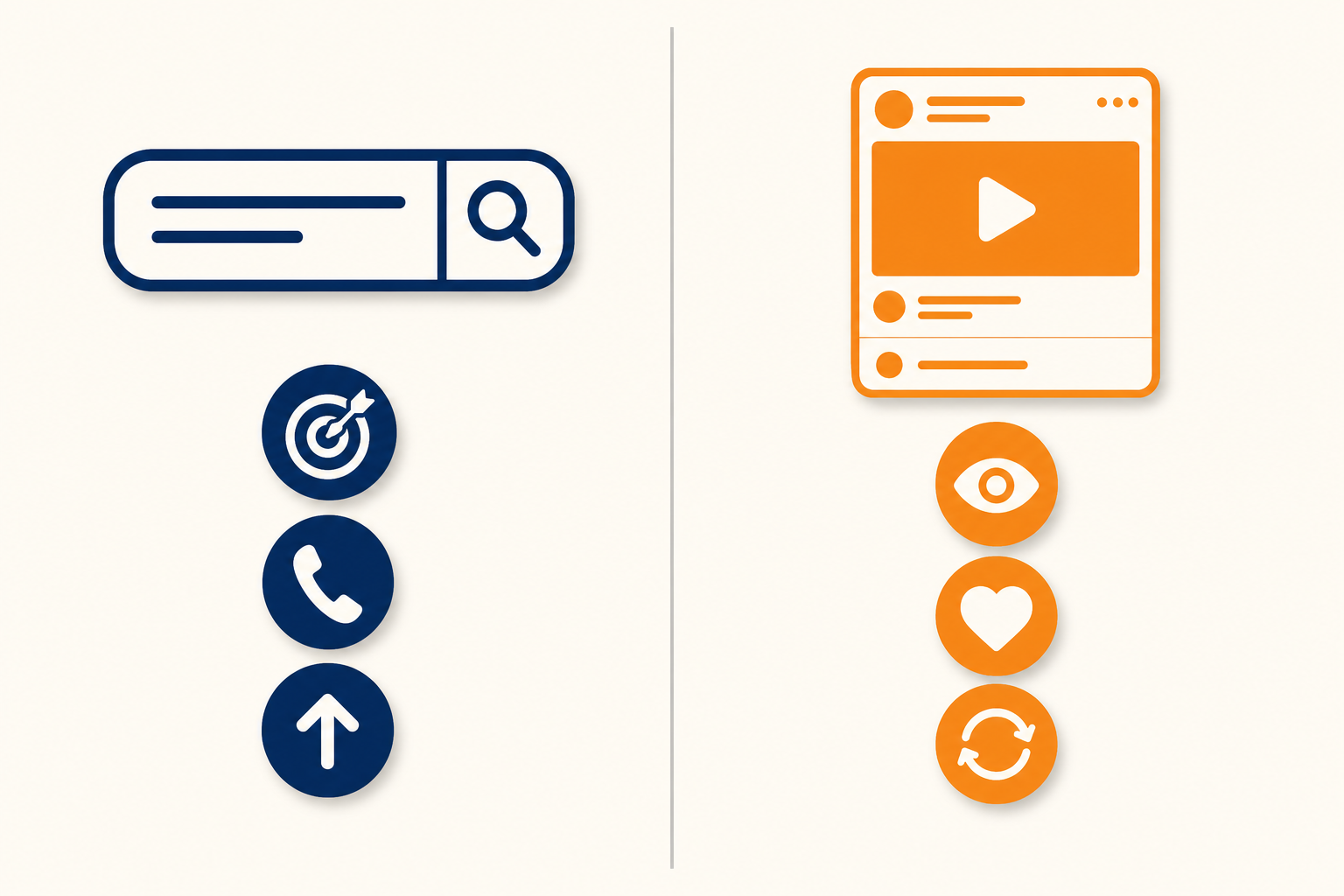
AI Max for Search is now a standard, generally available feature with expanded controls. Google reports that advertisers using the full AI Max suite - search term matching, text customization, and final URL expansion - see an average of 7% more conversions or conversion value at similar CPA/ROAS, compared to using search term matching alone (source: Google Ads & Commerce blog).
More consequentially: starting in September 2026, eligible Search campaigns using Dynamic Search Ads (DSA), automatically created assets (ACA), and campaign-level broad match settings will be auto-upgraded to AI Max. After that point, you won't be able to create new DSA campaigns through Google Ads, the Editor, or the API (source).
In April 2026, Google added new AI Max features including the AI Brief tool (powered by Gemini), which lets advertisers steer messaging, matching, and audience guidance in plain English, plus mandatory text disclaimers for regulated industries that need to use Final URL expansion (source: Google Ads & Commerce blog).
What it means for home service businesses: AI Max generates ad copy from your site, expands match types, and can dynamically choose landing pages. That's powerful - and it can backfire if your site has thin content, off-topic pages, or service pages outside your operating area.
What we recommend:
- Audit your site for pages you would not want AI Max to send traffic to, and add URL exclusions accordingly.
- Tighten your sitemap so AI Max draws from pages you're comfortable advertising.
- Test AI Max in one campaign first before the September auto-upgrade.
- Use AI Brief to give the system plain-English rules - for example, "never quote prices," "prioritize emergency service queries," or "highlight financing for roof replacement."
2. Call-only ads are being phased out
If your business depends on phone calls, this is the most important 2026 update on the list.
According to Google's own support documentation, call-only ads are being deprecated on a two-phase timeline: new call-only ads can no longer be created as of February 2026, and all existing call-only ads will stop receiving impressions in February 2027 (source: Google Ads Help). The replacement is responsive search ads (RSAs) with call assets attached (source: Google Ads Help).
What it means for home service businesses: HVAC, plumbing, garage door, pest control, and other call-driven verticals need to migrate well before the 2027 deadline. Letting it run to the wire risks gaps in lead flow during your busiest season.
What we recommend:
- Audit every campaign for active call-only ads.
- Build responsive search ads with call assets in every ad group that previously relied on call-only.
- Set up call-conversion tracking with a connect-time threshold (e.g., 60 seconds) to filter out misdials and hang-ups.
- Restrict call assets to business hours so paid calls don't ring an unstaffed line.
- Treat the migration as a phased rollout, not a one-day flip - RSAs need a learning period.
3. Performance Max gets asset experiments and channel-level reporting
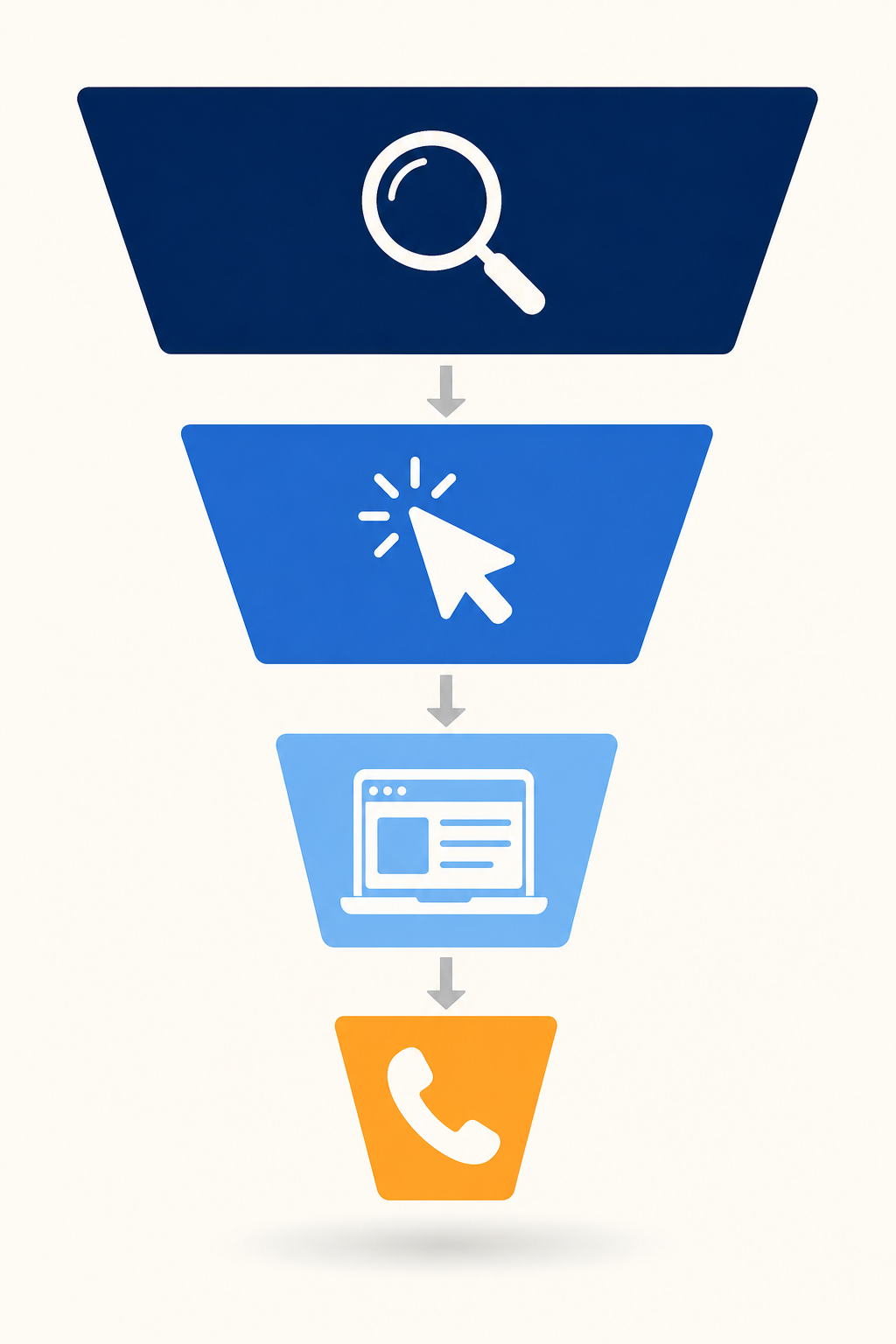
Performance Max has been criticized for years as a black box. In April 2026, Google announced asset experiments for Performance Max alongside other experiments-page updates (source: Google Ads announcements page). Google has also expanded channel-level reporting and asset-level segmentation, giving advertisers a clearer view of where spend goes inside PMax.
What it means for home service businesses: For local services, where a single strong testimonial or before/after image can meaningfully change CTR, the ability to A/B test creative inside PMax is a real upgrade. Channel-level reporting also helps identify whether YouTube or Display placements are pulling blended ROAS down.
What we recommend:
- Run a structured asset experiment per campaign: image style (real job photos vs. stock), headline angle (emergency vs. scheduled service), CTA tone (call now vs. book online).
- Use channel-level reporting to spot underperforming placements and adjust your asset mix.
- Don't lean on PMax to "figure it out" without strong conversion data feeding it. Performance Max can waste budget quickly when conversion tracking is weak.
4. Real-Time Policy Reviews speed up ad approvals
In April 2026, Google rolled out Real-Time Policy Reviews, providing instant feedback on Responsive Search Ads as they're being built - reducing review times from hours to seconds (source: Google Ads announcements page).
What it means for home service businesses: For verticals that touch regulated areas - solar contractors with federal incentives, home-improvement financing, certain healthcare-adjacent services - faster policy feedback means fewer days lost to disapprovals.
What we recommend: Just use it. There's no setup. The instant feedback is built into the ad-creation flow.
5. Ads are now eligible inside AI Overviews
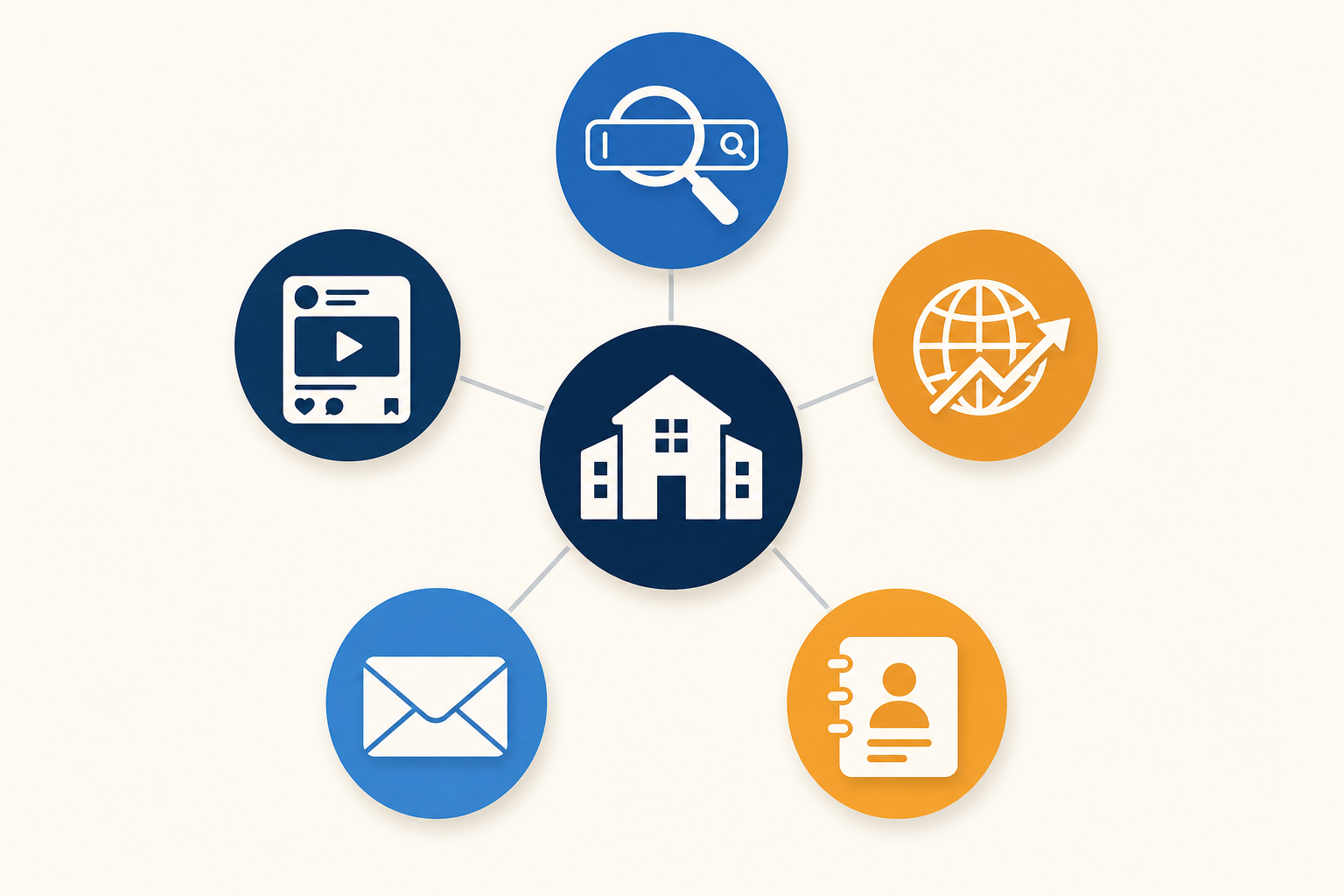
Ads can now appear above, below, or within AI Overviews - Google's AI-generated answer modules at the top of search results. Eligibility depends on geography, language, campaign type, intent, and ad relevance, and Google has positioned AI Max as a primary path for capturing this inventory (source: Google Ads & Commerce blog).
What it means for home service businesses: When a homeowner searches "how do I fix a slow shower drain in Miami," the AI Overview module may now include a sponsored answer with a plumber's ad embedded. This is a meaningful awareness-stage opportunity for service brands willing to optimize their content and assets for AI Overview eligibility.
What we recommend:
- Run AI Max as the primary path to AI Overview eligibility.
- Make sure your landing pages are structured around clear, factual answers (this also helps your local SEO and generative engine optimization).
- Track AI Overview placement in your search insights once it appears.
6. AI image generation inside Google Ads (Nano Banana Pro)
In December 2025, Google launched Nano Banana Pro, its most advanced image generation model, directly inside Google Ads (source: Google Ads announcements page). By 2026 it's a default option in many campaign types via the Asset Studio.
What it means for home service businesses: You can generate ad imagery - service trucks, before/after roofs, technician scenes, branded creative - without a designer. The caveat: AI imagery still reads as AI to many consumers, and trust matters in home services. Generated imagery is best used for backdrop creative; real photos remain the right choice for testimonials, before/afters, and proof.
What we recommend:
- Use AI imagery selectively, not as a wholesale replacement for real job photography.
- Always review generated imagery for accuracy (correct equipment, realistic uniforms, no fabricated certifications/badges).
- Disclose AI-generated content where required.
7. Google Marketing Live 2026: measurement and modeling upgrades
At Google Marketing Live 2026, Google announced updates to Data Manager (including a map view to visualize how data flows across systems), the launch of Meridian Studio (an enterprise platform for marketing mix modeling on Google Cloud), and Meridian GeoX for geographic incrementality testing (source: Google blog).
What it means for home service businesses: For multi-location operators, Meridian GeoX is the first time geographic incrementality testing is realistically accessible without a dedicated analytics team. It can help answer the question every multi-market operator asks: "Is my Tampa campaign actually driving incremental jobs, or would those customers have called us anyway?"
8. Privacy & measurement: Consent Mode v2 and Enhanced Conversions
A few measurement points home service operators should not ignore in 2026:
- Consent Mode v2 is the updated framework Google uses to communicate user consent choices to its ad systems. It became required for advertisers serving traffic in the European Economic Area (EEA) and UK in March 2024 (source: Google Tag Manager Help; Google Ads Help). For US-only home service businesses, Consent Mode v2 is not legally mandated, but US state privacy laws (California, Colorado, Texas, Connecticut, and others) are moving in a similar direction, and implementing it now improves conversion modeling and audience signal quality even without an EEA requirement.
- Enhanced Conversions lets you send hashed first-party data (email, phone, address) to Google Ads to recover conversions that cookie-based tracking misses. For home service businesses with phone-heavy lead flow, it's one of the higher-leverage measurement upgrades available.
- Modeled conversions are increasingly part of Google's reporting. They should be validated against CRM data - not treated as ground truth.
What we generally recommend across home service accounts

For Roxfire clients running Google Ads in 2026, the standard checklist looks roughly like this:
- Migrate any remaining call-only ads to RSAs with call assets - well before the February 2027 sunset.
- Test AI Max in one Search campaign first, measuring CPL and lead quality vs. the legacy structure.
- Build an AI Brief document per account so the system stays on-brand and on-message.
- Run at least one structured asset experiment per quarter inside Performance Max.
- Audit conversion tracking quarterly - server-side tagging, Enhanced Conversions, offline conversion imports from the CRM, and modeled-vs-observed ratios.
- Implement Consent Mode (advanced where appropriate) for measurement quality, even for US-only operators.
- Track AI Overview placement once you start seeing it as an awareness-stage signal.
The bottom line
The pattern across every Google Ads 2026 update is the same: Google wants you to give the system more flexibility, more signals, and more trust - and in exchange, it does more of the optimization work. The trade-off is that "more trust" without strong fundamentals (clean tracking, well-structured pages, sharp conversion data) means budget is spent less efficiently, faster.
The home service businesses that come out of 2026 stronger will be the ones with clean signal pipelines feeding well-configured AI, and a human checking the work weekly.
Want a clear picture of how your account stacks up against the 2026 changes? **Book a Free Strategy Call with Roxfire**
FAQ: Google Ads 2026 Updates
Q: When will AI Max replace Dynamic Search Ads completely? According to Google, starting September 2026 you can no longer create new DSA campaigns. Existing campaigns will be auto-upgraded to AI Max with settings ported over to mirror your legacy configuration (source).
Q: When do call-only ads stop running? New call-only ad creation was removed in February 2026. Existing call-only ads will stop receiving impressions in February 2027 (source: Google Ads Help). Migrate to RSAs with call assets well in advance.
Q: Is Performance Max worth running in 2026 for home service businesses? It can be - when conversion tracking is solid and you take advantage of the new asset experiments and channel-level reporting. PMax with weak data can waste budget quickly. PMax with clean data and active oversight is one of the higher-ROI tools available.
Q: How do I get my ads into AI Overviews? AI Max is the primary path. Eligibility depends on campaign type, geography, language, intent, and ad relevance. There's no separate opt-in - Google determines eligibility per query.
Q: What's the most important 2026 update for a small HVAC or plumbing business? The call-only ads sunset and the AI Max rollout. Both will affect your account whether you act or not. Migrating proactively is significantly less disruptive than reacting on deadline.
Q: Do I need Consent Mode v2 if I only operate in the US? It's not legally required for US-only traffic - Consent Mode v2 is mandatory for EEA and UK traffic (source). That said, US state privacy laws are tightening, and implementing it improves the quality of your modeled conversions and audience signals regardless.
Want a Clear Picture of How Your Account Stacks Up?
Roxfire can review your campaign structure, conversion tracking, landing pages, and lead handling - and give you a clear migration plan before the September auto-upgrade.