
Let's be honest, B2B lead generation is everything for a service business. Without a steady stream of good prospects, growth flatlines, revenue gets shaky, and your sales team ends up chasing ghosts.
The hard part? B2B buyers today are smarter, more skeptical, and tougher to get in front of. They do their homework before they'll even talk to you. They're looking at you and your competitors. There are multiple people who have to sign off. And they want to see proof you know what you're doing before they'll cut a check.
This guide gives you the B2B lead gen strategies that are actually getting results in 2026. These are the exact plays we run for our clients at Roxfire to build pipelines that are predictable and can actually scale. No fluff, no theory—just what works, backed by real data.
Why B2B Lead Gen Isn't Like B2C
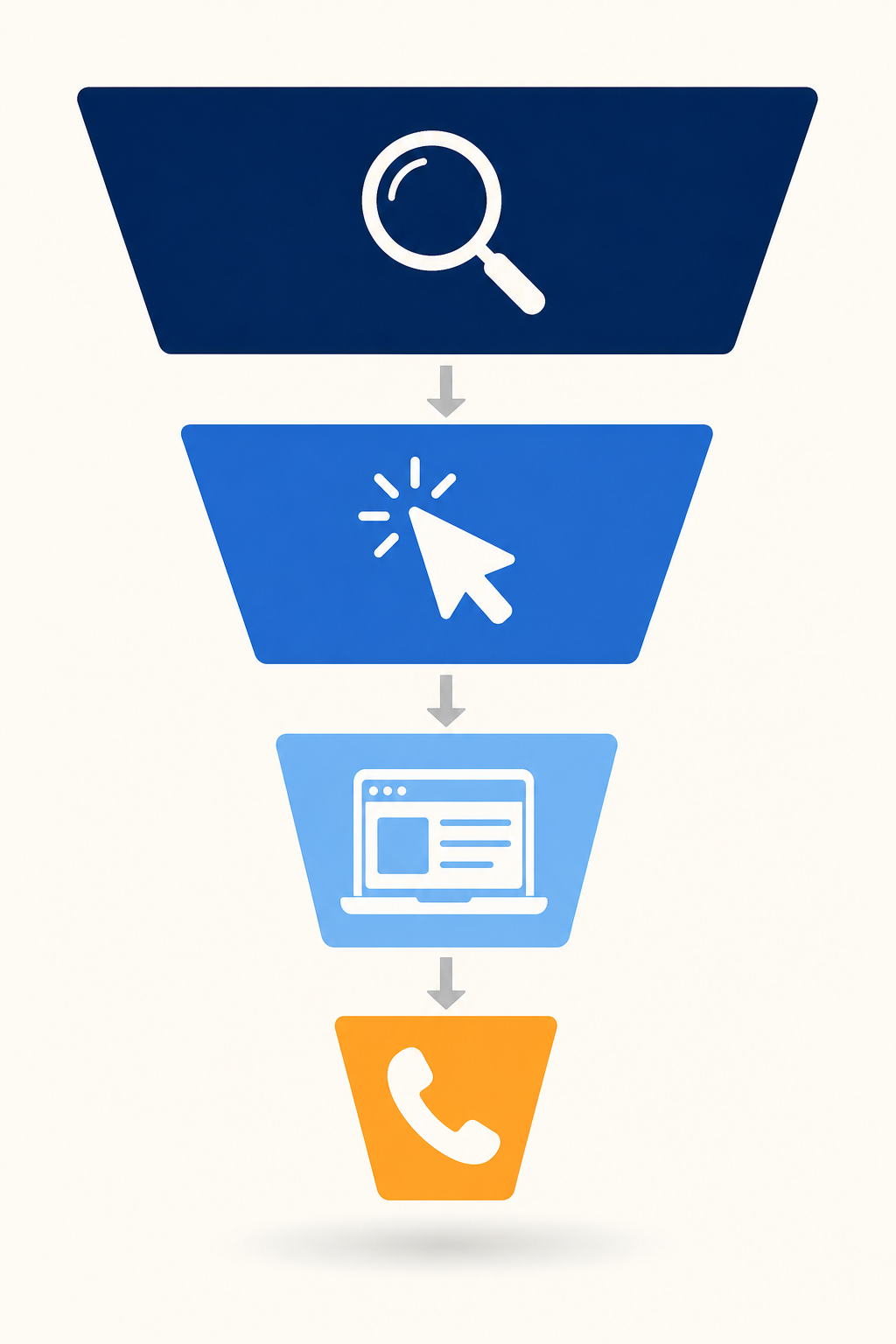
You can't treat B2B lead generation the same as B2C. The rules are completely different, and knowing why is the key to picking the right strategies.
Longer Sales Cycles
A B2B purchase isn't an impulse buy. It's a 3-6 month process. A roofing company looking for a new marketing agency won't click an ad and sign up on the spot. They'll dig around, check out their options, ask for proposals, and get their team to weigh in. Your lead gen has to play the long game with nurturing and multiple touchpoints.
A Whole Committee of Decision-Makers
Get this: the average B2B deal involves 6-10 people. The owner might find you on Google, but you can bet the operations manager, the CFO, and a partner will all have their say. Your messaging has to speak to each of their concerns.
Higher Customer Lifetime Value
Here's the upside: B2B customers are worth a lot more. A single client could be worth $50,000 to $500,000+ over their lifetime. That means you can spend more to get a lead and still see a fantastic ROI.
Trust Is the Only Currency
B2B buyers are spending the company's money, not their own. They need to see proof you're the real deal: case studies, testimonials, hard data, and credentials. You have to build trust with every single interaction.
Intent Is Everything
Not all leads are created equal. Someone searching for "best marketing agency for HVAC companies" is way more ready to buy than someone reading a generic blog post. You have to focus on the channels that bring you high-intent prospects.
Using Google Ads for B2B Lead Generation
When it comes to high-intent leads, Google Ads is still king. When someone is actively searching for a service you offer, you need to be there.
How to Structure Your B2B Campaigns
Think about your campaigns in terms of buyer intent:
- High intent (Bottom of the funnel): These are your money keywords like "marketing agency for contractors" or "B2B lead generation services." People searching this are ready to talk. Bid aggressively. - Medium intent (Middle of the funnel): Think "how to generate more leads" or "best marketing strategies for service businesses." These folks are in research mode. Reel them in with valuable content. - Low intent (Top of the funnel): This is for broader terms like "what is performance marketing." Use these for brand awareness, but don't break the bank on them.
Your Keyword Strategy
Focus on keywords that signal commercial intent. In B2B, this often means adding words like "agency," "services," "company," or industry-specific terms. Long-tail keywords are your best friend here. "Lead generation agency for HVAC companies" will always beat just "lead generation."
Your Landing Page Checklist
B2B landing pages have a specific job to do. Make sure yours has:
- A crystal-clear value prop right at the top - Tons of social proof (client logos, case studies, testimonials) - Specific numbers and results - A simple form (name, email, company, phone) - Copy that makes them feel safe ("No long-term contracts," "Get a free strategy session")
What to Expect
For B2B Google Ads, you can expect to see numbers like this: Cost per click: $5-$50 (it varies a lot). Cost per lead: $50-$200. Lead-to-customer rate: 10-25%. A single customer could be worth $10k-$100k+. You should be aiming for a 5x-20x return on your ad spend.
LinkedIn: Your B2B Goldmine
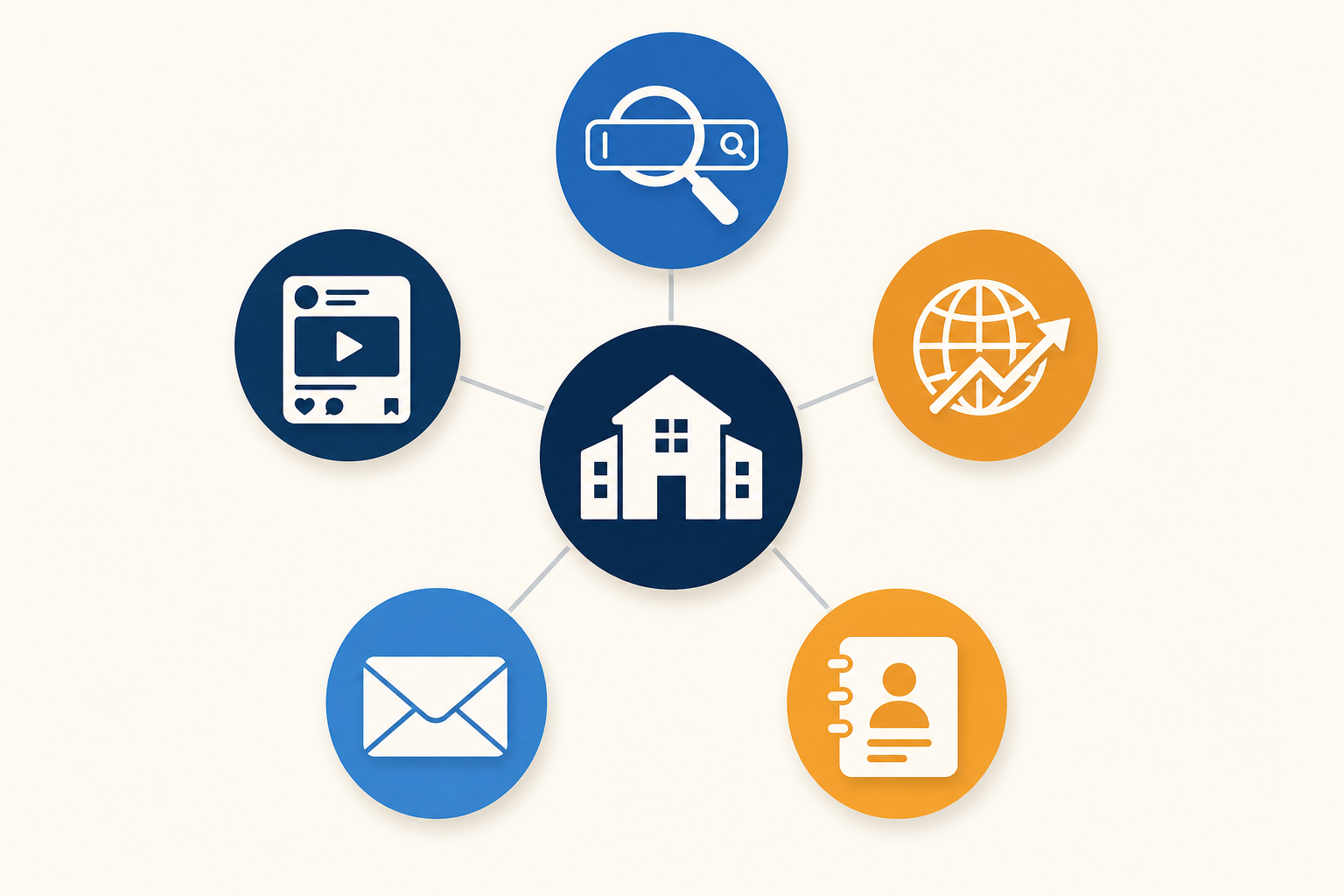
LinkedIn is, without a doubt, the best platform for B2B leads, both paid and organic. A staggering 80% of B2B social media leads come from LinkedIn.
LinkedIn Ads
LinkedIn's targeting is a game-changer for B2B. You can get hyper-specific, targeting by job title, company size, industry, seniority, and even specific companies. This means your ads are seen by actual decision-makers.
Ad formats that kill it for B2B:
- Sponsored Content: These look like regular posts in the feed. Perfect for sharing thought leadership and case studies. - Message Ads: Slide right into a prospect's inbox. Great for event invites or high-value offers. - Lead Gen Forms: These pre-filled forms let people sign up without ever leaving LinkedIn. They have the highest conversion rates for a reason.
Your Organic LinkedIn Game Plan
Ads are great, but your organic content is what builds real authority over time:
- Post 3-5 times a week with content that actually helps people - Share your wins—case studies and client results (with their blessing, of course) - Jump into the comments on your prospects' posts - Publish articles that prove you know your stuff - Use the newsletter feature to stay in front of your audience
Connecting and Reaching Out
Yes, cold outreach can still work if you don't do it like a robot:
- Connect with the right people in your target industries - Always personalize your connection request. Give them a real reason to connect. - Give, give, give before you ask for anything - Follow up with something useful, not a sales pitch - When the time is right, move the conversation to a call
Content Marketing That Actually Gets You Leads
B2B content marketing isn't about writing blog posts and hoping for traffic. It's about creating assets that pull in, educate, and convert the right kind of prospects.
Content That Converts
Case Studies are your secret weapon. They show real results for real clients. The formula is simple: Problem → Solution → Results. Get specific with the numbers. "Grew qualified leads by 340% in 90 days" is way more powerful than "improved their marketing."
Industry-Specific Guides make you the go-to expert. A guide like "The Ultimate Marketing Playbook for HVAC Companies" is a magnet for your ideal clients. See our own guide to /hvac-marketing for an example.
ROI Calculators and Tools offer instant value and capture leads. A tool that shows a prospect the potential return on their marketing investment? That's a highly qualified lead.
Webinars and Videos build trust like nothing else. B2B buyers want to see the people they're about to do business with.
An SEO-Driven Content Strategy
Create content that answers the questions your ideal clients are asking Google:
- Problem-aware keywords: "Why are my Google ads not working?" - Solution-aware keywords: "Best marketing agency for contractors - Comparison keywords: "Marketing agency vs in-house team - Industry keywords: "HVAC marketing strategies 2026
And every single piece of content needs a clear call-to-action that pushes people toward a conversation.
Turning More Visitors Into B2B Leads

Getting traffic is just one piece of the puzzle. You have to be deliberate about turning that traffic into qualified leads.
Fine-Tuning Your Forms
B2B forms are a balancing act. You need enough info, but you can't create too much friction:
- Just the essentials: Name, email, company, phone - Add qualifying questions where it makes sense (like budget or timeline) - For more complex offers, try a multi-step form—they actually have higher completion rates - Put reassuring text right by the submit button - Test where you put the form: right at the top vs. after they've seen some proof
Placing Your Social Proof
B2B buyers need to see that other people trust you. Put your social proof where they can't miss it:
- Client logos right near the top of the page - Testimonials right next to your calls-to-action - Links to case studies within your service descriptions - Badges and certifications (Google Ads Certified, HubSpot, etc.) - Sprinkle specific results and numbers everywhere
Page Speed and Mobile Experience
More than half of mobile visitors will bounce if your site takes longer than 3 seconds to load. Decision-makers are browsing on their phones all the time. Your pages have to be fast and look great on any device. No excuses.
Chat and Responding Instantly
When a B2B prospect is interested, they expect a fast response. Use live chat or a chatbot to engage them right away. The data shows that companies who respond in under 5 minutes are 100 times more likely to connect with a lead.
Retargeting: Winning Back Lost Opportunities
Fact: 97% of people who visit your website for the first time will leave without taking action. Retargeting is how you bring them back.
How B2B Retargeting Works
It's simple. When someone visits your site, a tracking pixel follows them around the web. Then, you can show them targeted ads on Google, Facebook, and LinkedIn to stay on their radar.
B2B Retargeting Plays
Segmented retargeting means showing different ads based on what they looked at. Someone who checked out your pricing page should see a different ad than someone who just read a blog post.
Sequential retargeting is about telling a story over time. The first ad is for brand awareness. The second shows off a case study. The third might be an invite for a consultation.
Cross-platform retargeting follows your prospects from Google to Facebook to LinkedIn, so you're visible wherever they go.
The Impact You Can Expect
Retargeting usually gets you: 3-5x higher click-through rates than normal display ads. A 50-70% lower cost to acquire a customer. A 26% increase in people coming back to your site. And a huge boost in brand recall and trust.
The trick is to cap the frequency. You want to stay top-of-mind, not be annoying. We usually find that 15-20 impressions per user each month is the sweet spot.
How to Measure B2B Lead Gen Success
If you don't measure it, you can't improve it. Keep a close eye on these metrics to fine-tune your B2B lead gen:
Lead Volume Metrics
- Total leads you're getting from each channel - Marketing Qualified Leads (MQLs) — the leads that fit your criteria - Sales Qualified Leads (SQLs) — the leads that are ready for a sales call - Lead velocity — how much your pipeline is growing month over month
Cost Metrics
- Cost Per Lead (CPL) for each channel - Cost Per Marketing Qualified Lead - Cost Per Sales Qualified Lead - Customer Acquisition Cost (CAC)
Quality Metrics
- Lead-to-MQL conversion rate - MQL-to-SQL conversion rate - SQL-to-customer conversion rate - Average deal size from each channel - Customer lifetime value, broken down by where they came from
ROI Metrics
- Return on Ad Spend (ROAS) for each channel - Marketing ROI (revenue from marketing / cost of marketing) - Payback period — how fast you make back your marketing investment
Attribution
B2B attribution is tricky because buyers have so many touchpoints. You need to use multi-touch attribution to see how all your channels work together. First-touch tells you what brought them in the door. Last-touch tells you what closed the deal. The real story is usually somewhere in the middle.
Your Implementation Roadmap
Ready to build a real B2B lead generation machine? Here's your roadmap:
Month 1: The Foundation
- Nail down your ideal customer profile (industry, company size, who you need to talk to) - Audit your website and landing pages to find conversion leaks - Get your tracking set up: Google Analytics, conversion pixels, and call tracking - Launch Google Ads campaigns going after high-intent keywords - Fine-tune your Google Business Profile and local listings
Month 2: Expansion
- Launch LinkedIn ads targeting your ideal decision-makers - Create 2-3 killer case studies with hard numbers - Set up retargeting across Google and social media - Build out email nurture sequences for leads who aren't ready to buy yet - Start executing your organic LinkedIn content strategy
Month 3: Optimization
- Dig into the data and start fine-tuning your campaigns - A/B test your landing pages, ad copy, and calls-to-action - Double down on what's working and cut what's not - Create more content assets (like guides or calculators) - Refine your lead scoring and qualification process
Month 4 and Beyond: Scale
- Pour more budget into your proven channels - Expand to new platforms or ad formats - Keep testing, keep learning, and keep growing
Ready to Fill Your Pipeline?
Let's talk. Book a free strategy call with our team and we'll dig into your current lead gen, find the gaps, and map out a plan to get you a steady stream of qualified prospects.